Opinion Parents · Teachers · General public
Will AI kill school as we know it?
No, artificial intelligence will not kill learning. It will kill a model that has run its course: "I recite, you grade". And that is good news, provided schools dare to change.
This article is an opinion piece: it sets out Honowa Academy's position and invites debate.
Contents
Our position in brief
- AI does not kill learning: nobody can learn for you, not even a machine.
- It makes obsolete rote learning as proof, homework that is easy to hand off, and the degree as the only guarantee.
- Practice, real projects, mentoring and critical thinking are taking on new value.
- The schools that win will not ban AI: they will train pupils able to do better than it.
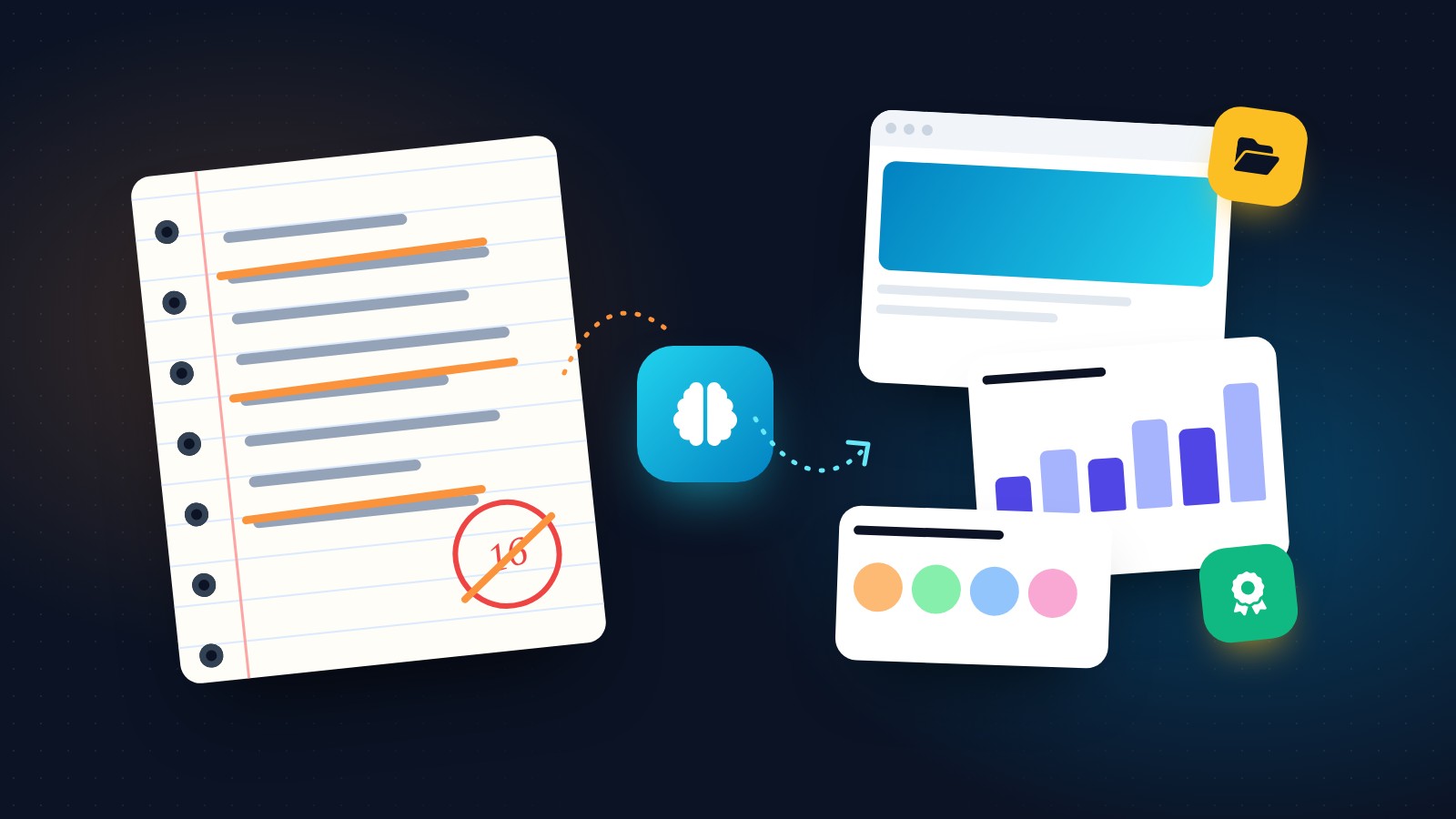
One evening, a final-year secondary school student has to hand in a five-page presentation on decolonisation. He opens ChatGPT, types one sentence, and thirty seconds later the text is there: well structured, error-free, with an introduction and a conclusion. He prints it. The next day, he gets 16 out of 20. He has learned nothing, and nobody noticed.
This scene now plays out in thousands of homes, in Cameroon as elsewhere. And it raises a question that worries parents as much as teachers: is artificial intelligence going to kill school?
Our answer is clear, and we stand by it: no, AI will not kill learning. It will kill a model that has run its course, the "I recite, you grade" model. And that is rather good news, provided schools have the courage to change.
AI does not kill learning
Every major invention has raised fears for the death of school. Calculators were supposed to make pupils unable to count. The internet was supposed to make libraries useless. Wikipedia was supposed to replace teachers.
None of that happened. Calculators did not kill mathematics: they killed hand calculation as an end in itself, and freed up time for reasoning. The internet did not kill knowledge: it made information abundant, and therefore made the ability to sort it more valuable.
Artificial intelligence is following the same path, faster and deeper. It can produce a text, solve an exercise, summarise a book. But there is one thing it cannot do: learn for you. Learning is not producing a document. It is transforming yourself, becoming able to do what you could not do yesterday. No machine can do that work for someone else.
What is under threat, then, is not learning. It is a particular way of organising and checking it.
What is disappearing
Rote learning as proof of intelligence
For generations, reciting a definition, a date or an entire lesson was enough to prove you had "worked". Yet AI recites better than any pupil, without ever misplacing a comma.
Let us be clear: memory still matters. You cannot reason in a vacuum, and you need to know the basics of a subject to understand it. What is dying is not memory, but recitation as an end and as the main assessment tool. A pupil who knows a rule by heart without being able to apply it has, in reality, learned nothing useful.
Homework you can hand off to a machine
The take-home essay, the presentation, the book report, the standard set of exercises: anything a pupil can now hand to ChatGPT in a few seconds has lost its value as a measure.
If a machine can do an assignment in thirty seconds, that assignment no longer measures the pupil. It measures their access to a phone.
So should AI be banned? It is tempting, but an illusion. Tools that claim to detect AI-written text are often wrong: OpenAI, the company behind ChatGPT, withdrew its own detector in 2023 because it was not reliable enough. And a pupil with a phone will always find a way. The only lasting answer is to change the nature of homework, not to step up surveillance.
The degree as the only proof
A degree says one thing: you passed exams at a given moment. For a long time, that was enough for an employer. It no longer is, especially in digital jobs, where recruiters increasingly ask: "Show me what you have done." As we explained in our article on the digital jobs hiring in Cameroon, a portfolio of real projects often carries more weight than a pile of certificates.
Degrees will not disappear. But they are no longer sufficient proof. They become a starting point, not a guarantee.
Losing value : Reciting a lesson by heart
Gaining value : Applying it to a real case
Losing value : The well-presented assignment
Gaining value : The journey, explained out loud
Losing value : The exercise with one right answer
Gaining value : The project with a real client and real constraints
Losing value : The teacher who transmits
Gaining value : The trainer who guides and reviews
Losing value : Believing what is written
Gaining value : Doubting, checking, judging
Losing value : The degree as sole proof
Gaining value : The portfolio of real work
What is gaining value
If AI makes some things easy, it makes others far more valuable. They are precisely the ones no machine can do for you.
Practice
You do not learn to swim by reading a book about swimming, or to drive by watching videos. The same goes for most skills: writing, programming, selling, analysing, persuading. What you truly learn is what you have done yourself, several times, making mistakes along the way. AI can show the way; it cannot practise for you.
Real projects
A school exercise has one right answer, known in advance. A real project has a client, constraints, a deadline, surprises, and sometimes several right answers. It is in that complexity that you learn to think, decide and take responsibility. And a real project leaves something you can show: a live website, a campaign with its results, a dashboard used by a team.
Mentoring
When information becomes free and unlimited, what is missing is no longer access to knowledge, but guidance. Someone who reviews your work, tells you why it is not good enough yet, and pushes you beyond what you thought you could do. AI can act as a patient assistant, available at any hour. But the high standards, the example and the trust of a trainer who believes in you remain deeply human.
Critical thinking
AI makes mistakes, with disconcerting confidence. It can invent a source, a date or a figure. In this world, the most valuable skill becomes the ability to doubt, check, compare and judge. Paradoxically, AI makes critical thinking more important than ever, and it is better taught by using AI than by banning it: asking a pupil to find the errors in a ChatGPT answer is a remarkably formative exercise.
What this changes for parents
You do not need to be a technology expert to support your children. A few habits are enough.
- Ask them to explain, not just to show. A well-presented assignment no longer proves anything. A child who can explain in their own words what they did has learned.
- Value what they build. A small website, an edited video, a club, a little business in the neighbourhood: these projects count as much as grades.
- Do not demonise AI. Banning it completely does not protect them; teaching them to use it intelligently does.
- Question schools and training centres. How do they assess learners? How much room do they give to practice and projects? The answers speak volumes.
What this changes for teachers
This is not a job that is getting easier: it is a job that is getting more important. And we know that Cameroonian teachers often work in difficult conditions, with overcrowded classes and few resources. Changing the model takes time and support, not orders.
Some approaches, however, are within everyone's reach:
- assess the journey as much as the result: drafts, steps, choices made along the way;
- give more room to oral work and in-class work, where you can see the pupil think;
- use AI as teaching material: have pupils critique, correct or improve a generated answer;
- move from transmitter to guide, asking the right questions rather than giving all the answers.
Tomorrow's school will not be the one that bans AI, but the one that makes its pupils able to do better than it.
Our model: learning by doing
At Honowa Academy, we did not wait for AI to make this choice, but it makes it more obvious every day. Since 2016, our courses have rested on a simple principle: you learn by doing.
In practice, this means our learners work on real projects from the start of their programme, not on exercises with the answers at the back of the book. It means artificial intelligence tools are part of all our courses, because it would make no sense to prepare people for professional life while ignoring the tools it uses. And it means support does not stop at the last session: CV, portfolio, interview preparation and introductions to our partner companies.
And above all, it means you do not leave with just a certificate. You leave with a portfolio: real, live work you can show a recruiter or a client, and whose every choice you can explain. It is the best possible proof that you have truly learned something, and no AI can produce it for you.
In conclusion
School as we know it, the kind that asks you to recite and then grades the recitation, is indeed going to disappear. Nobody should miss it.
What replaces it will ask more of pupils, and more of teachers. It will be built on practice, projects, guidance and critical thinking. It will train people who can use AI, and do what it cannot.
AI will not kill school. It will force it to become what it always should have been: a place where people truly learn.
Frequently asked questions
Should ChatGPT be banned for pupils?
A total ban is an illusion and of little use: pupils can access it on their phones. It is more effective to teach them to use it critically and to change the nature of homework, giving more weight to oral work, in-class work and projects.
Does artificial intelligence make pupils lazy?
It can, if it is used to avoid thinking. Used to explain, give examples or critique an answer, it becomes an excellent learning tool. It all depends on how pupils are assessed.
Has learning by heart become useless?
No. Knowing the basics of a subject is still essential for reasoning. What is losing value is recitation as an end and as the main means of assessment: being able to apply knowledge now counts far more than being able to recite it.
Can you tell whether an assignment was written by AI?
Not reliably. AI text detectors are often wrong, to the point that OpenAI withdrew its own tool in 2023. The best check is still to ask the pupil to explain their work in their own words.